
Stock Picking by Gemini Deep Research
Check it here https://ahlikompie.com/7577-gemini-deep-stock-research.html
Stock Picking by AI
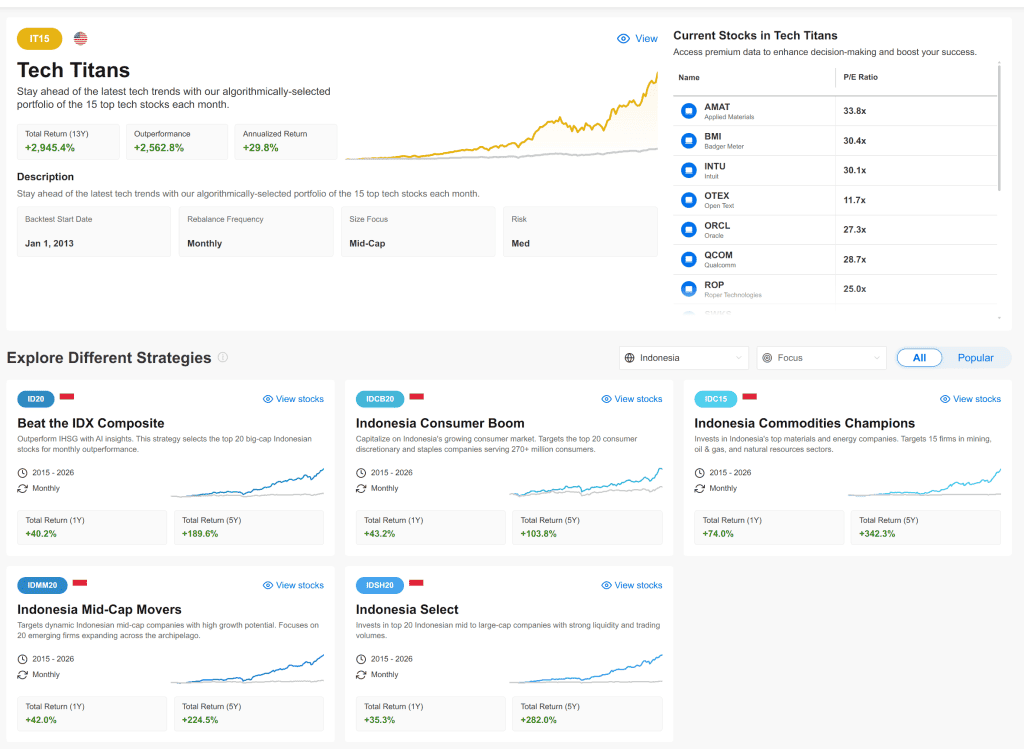
InvestingCom ProPicks AI (Monthly Trading)
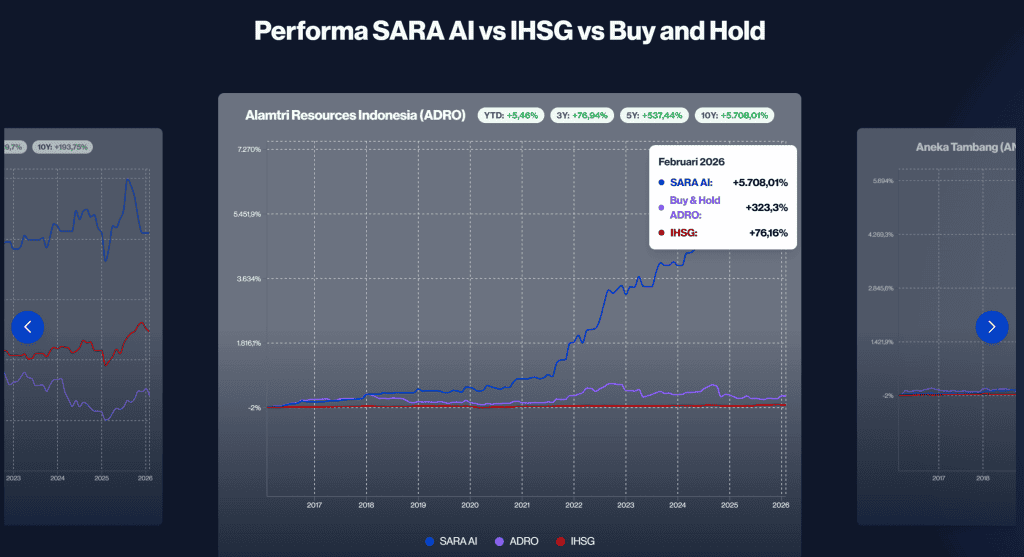
SaraInvest AI (Daily Trading)
Alternatif Lainnya
Saat ini ditulis belum ada yang sebagus dua di atas. Tapi kemungkinan akan bagus:
Stock Picking by Algo (Human)


What we test
At a high level, we test whether stocks that look undervalued by our models tend to deliver better forward returns than stocks that look overvalued.
To avoid “cherry-picking,” we compute these metrics on a large sample and use robust statistics.
VIC: Valuation-Return Correlation
What it is: A rank correlation between our valuation signal and 12-month forward returns.
How to read it: undervalued ranks tend to outperform overvalued ranks. A positive correlation means the signal is directionally consistent across the cross-section (not just a few names).
Quintile Spread
What it is: The difference between the top 20% most undervalued and the bottom 20% most overvalued stocks, measured by their forward returns.
How to read it: This is an intuitive “portfolio-style” test: “What happens if you buy undervalued and avoid overvalued?”
Hit Rate
What it is: The share of cases where the valuation signal gets the direction right (undervalued → positive forward return, overvalued → negative forward return).
How to read it: Above 50% indicates the signal is better than coin-flip directionally, even before position sizing or risk controls.
Note that a 100% hit rate is not realistic: an undervalued stock can become even more undervalued before it recovers (and vice versa).
Latest global results
VIC (12M) 0.3204 Quintile Spread 28.3% Hit Rate 65.1% Across a large sample, undervaluation identified by our models is associated with meaningfully better forward outcomes, the “undervalued vs overvalued” separation is large, and directional accuracy is strong.
Why these checks are trustworthy?
Large sample: results aren’t driven by a small number of hand-picked examples.
Forward-looking test: we evaluate using future returns, not in-sample fit.
Robust statistics: we reduce the influence of rare extreme events where appropriate
Multiple lenses: we look at correlation, portfolio spreads, directional hit rate, tail risk, and cross-model agreement.
https://www.alphaspread.com/


Generally, where earnings go the stock price will follow in the long run, and FAST Graphs proves that time and time again. Where earnings go, stock price follows. The stock price may disconnect occasionally, but in the long run it always tends to follow the earnings.
Also check: https://docs.fastgraphs.com/en/articles/9457734-metrics, https://intercom.help/fast-graphs/en/articles/9421089-navigating-fast-graphs#h_3cf04d34d0


Buat Sendiri Dengan AI General
# Synthesized Prompt
MASTER PROMPT — Single IDX stock, 1-month horizon, quantified, anti-consensus (No Sharia)
ROLE
You are an accountable, numbers-first equity analyst. You will analyze exactly ONE stock: IDX:{TICKER}, for a 1-month horizon.
You may cite analyst consensus, but you must form an independent view and explicitly state where you agree and disagree.TIME
As-of: {AS_OF_DATE_TIME}
Horizon end date: {AS_OF_DATE_TIME + 1 month}NON-NEGOTIABLE OUTPUT RULES
1) Your response MUST begin with exactly ONE of these two lines (choose one):
✅ Conviction +x% bull @ +y% gain, IDX:{TICKER}, after 1 month
⛔ Conviction -x% bear @ -y% loss, IDX:{TICKER}, after 1 month2) The SAME chosen line MUST be repeated as the LAST line (shown twice total).
3) Conviction is one number in [-100%, +100%].
4) Gain/loss is one number in % for the next 1 month and must match either:
(A) expected-value return, or (B) base-case return — state which you used.
5) No vague language (“could/might/maybe”) unless you attach (i) probability and (ii) a concrete trigger.
6) If any required datapoint is unavailable: write “MISSING”, use best proxy if possible, and reduce conviction.REQUIRED DATA INJECTION (pull with your tools; otherwise mark MISSING)
A) Price/market
- Current price (with timestamp), 1D/1W/1M return, 20D avg volume, market cap, 52W high/low.
B) Fundamentals (latest available)
- P/E (TTM; forward if available), EPS (TTM), EPS growth (YoY or next FY), revenue growth, margins (gross/operating/net),
ROE or ROIC, leverage (net debt/EBITDA or debt/equity).C) News & catalysts
- 5–10 most relevant headlines from last 45 days (prioritize last 14), each with date + tag: (+) / (-) / (±) for 1-month impact.
- Identify catalysts occurring in the next 35 days (earnings/dividend/corporate action/regulatory/contract/macro print).
D) Technicals (1-month trading view)
- 20D/50D MA trend, RSI(14), MACD, ATR/volatility proxy, key support/resistance, volume confirmation,
and an explicit invalidation level (“If close below/above X, thesis breaks”).E) Analyst consensus (if coverage exists; otherwise state “No reliable consensus found”)
- Rating distribution (Buy/Hold/Sell if available), average target, high/low target, recent changes (last 30 days if available).
REQUIRED SECTION ORDER (do not reorder)
(1) DATA SNAPSHOT (numbers only)
- Price:
- Returns (1D/1W/1M):
- 52W (low/high):
- 20D avg vol:
- Valuation (P/E, etc.):
- Growth (EPS/revenue):
- Profitability (margins, ROE/ROIC):
- Leverage:
(2) NEWS & CATALYSTS (bullets, dated)
- Next 35 days:
- Recent (last 45d, prioritized 14d):
(3) FUNDAMENTALS (bullets, 1-month relevance)
Connect valuation ↔ growth ↔ balance sheet ↔ “what can change in 30 days”.
(4) TECHNICAL SETUP (bullets)
- Trend/momentum read (RSI/MACD/MAs):
- Key support/resistance:
- Invalidation level (must be a price):
- Risk/reward note (is upside capped by resistance vs downside to support?):
(5) ANALYST CONSENSUS VS MY VIEW
Street view (numbers only):
- Rating:
- Target(s):
- Implied return (state timeframe of the Street target if known):
My independent view (must be specific):
- Where I AGREE (2–4 bullets):
- Where I DISAGREE (3–6 bullets; falsifiable; “Street misses/overweights X because Y evidence”):
- Gap check: if Street target implies large upside but 1-month technical resistance is near, call it out explicitly.
(6) 1-MONTH FORECAST (forced quantification)
Provide 3 scenarios; probabilities must sum to 100%:
- Bull: prob %, target price, return %, single trigger.
- Base: prob %, target price, return %, single trigger.
- Bear: prob %, target price, return %, single trigger.
Show math:
- Scenario return = (Target / Current – 1)
- Expected return = Σ(probability × scenario return)
(7) CONVICTION, RISKS, ACCOUNTABILITY
- Final stance: Bull or Bear (no “neutral”).
- Conviction score: [-100%..+100%] with 1–2 sentences explaining calibration (expected return magnitude, skew, catalyst clarity, data quality).
- Key risks that flip my view (max 5 bullets; each tied to a trigger).
- Check in 1 month (end date): what to verify (price vs targets, which scenario occurred, catalyst outcome, invalidation breach).
FINAL REMINDER
Start with the chosen conviction line, follow the section order, and end by repeating the exact same conviction line.
THE TICKER TO CHECK
Now, check this stock: ___:___
# Task for Synthesizer
Craft a prompt to synthesize all these concepts, but only for scanning and analyzing a single stock and one (1) month time horizon. Skip sharia screening, user will do it manually. We want to combine QMVC (Quality – Momentum – Value – Catalyst – Growth) as stock picking principles:
- Jesse Livermore’s momentum mastery => how price and earnings “momentum” are combined?
- Benjamin Graham’s value investing revolution => what key metrics measure “value”? Is this cheap?
- Warren Buffett’s quality-focused approach => what makes a company “high quality”?
- What about market sentiment? Catalysts, news? Any bad news? Any good news?
- What about company growth? Is it growing quarter by quarter, year by year?
- Why combining all factors works best?
Generally, where earnings go the stock price will follow in the long run, and FAST Graphs proves that time and time again. Where earnings go, stock price follows. The stock price may disconnect occasionally, but in the long run it always tends to follow the earnings.
# Output Format for AI
Output conviction from -100% (max bear) to +100% (max bull). And the gain/loss in percentage. Explain where you agree/disagree with analysts consensus. Do your original analysis, do not blindly follow analysts consensus.
Time horizon: 1 (one) month from now
Sample conclusion, must be ONLY one of these two, must be shown TWICE (at the start and at the end of your response):
✅ Conviction +x% bull @ +y% gain, IDX:ABCD, after {time horizon}
⛔ Conviction -x% bear @ -y% loss, IDX:ABCD, after {time horizon}
# AI Stock Picking, WarrenAI Style
Analyze its fundamentals (P/E, EPS growth) using key metrics, gather recent relevant news via the news tool, review analyst consensus and price targets, and note any significant technical signals from technical indicators. Share your overall market sentiment on this stock and explain your reasoning.
Are you bullish or bearish on IDX:___ right now?
# AI Stock Picking, Grkportfolio Style
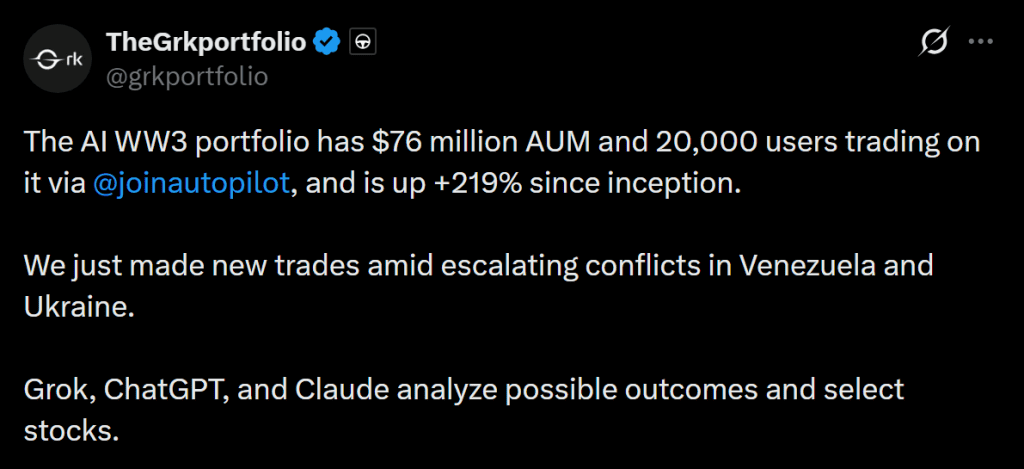
$88M AUM. +111% since last year using Grok to pick stocks in the WWIII portfolio. “LLMs are bad at stock picking.” You’re right. They are. But here’s what people miss: we don’t use LLMs to pick stocks. We built a SYSTEM that uses LLMs. Completely different thing
Ask Grok: “Should I buy RKLB?” You’ll get: – Outdated info or brief web search – Vague language (“could be a good opportunity”) – No accountability – No way to track if it’s right This is useless. And this is what 99% of people do.
A system isn’t “asking AI for stock picks.” A system is: – Injecting real-time data – Forcing structured outputs – Comparing against benchmarks – Tracking predictions over time – Iterating on what works The LLM is a component. Not the system.
Raw LLMs don’t know BKSY’s current price or backlog, sure, it may search but it is unreliable. Our system: 1. Pulls live financials 2. Fetches news 3. Contains geopolitical context 4. Injects ALL of this into the prompt Now the LLM has something real to analyze.
Raw LLM says: “BKSY has strong growth potential” Our system forces: – Expected return percentages Vague → quantified. Untrackable → measurable.
November 17, 2025. System outputs: RKLB: BUY, +42% expected 12M return KTOS: BUY, +38% expected 12M return 8 weeks later: RKLB: +90% KTOS: +56% You can’t improve what you don’t measure.
Each prompt trick compounds: One prompt becomes a research report that rivals Wall Street. Not because the LLM is smart. Because the SYSTEM extracts what the LLM knows.
We run this on all stocks every quarter. Designed by @alejandroll10 and @ai_prof_funds AI vs. Street. Every single name. Looking for disagreements. $88M AUM. +111% since Jan 2025.
Source: https://x.com/grkportfolio/status/2011258910276198711
Can Grok outperform politicians in investing? We partnered with a Wharton PhD to test whether Grok could beat the S&P 500, and, more interestingly, politicians. It turns out Grok can actually outperform Nancy Pelosi, and of course, the S&P 500. Here’s how we did it.
Every month, we ask Grok to forecast everything that can affect the stock market: Inflation, economic growth, unemployment, etc. But Grok can also forecast other events that we cannot with traditional methods
For example, Grok can reason and forecast about Supreme Court decisions, conflict escalations, tariffs, or other policy events. After that, we need to research thousands of firms in depth.
We find it best to split the task; we run thousands of parallel Grok calls using code. For each Grok instance, we investigate every firm in depth, considering recent price movements, news, earnings, catalysts, and anything that could affect the stock’s performance.
We then provide a fresh Grok instance with all the information from the previous steps and ask it to construct a 15-asset portfolio that should outperform the S&P 500. Grok may conduct additional research and is not limited to any particular assets. For example, it sometimes includes gold as a hedge.
Grok is up 33% since last February, vs 15% for the SP 500. You can join hundreds of users copying its trade via @joinautopilot. The portfolio is designed by @ai_prof_funds @alejandroll10
Source: https://x.com/grkportfolio/status/2015177148886122655
+44% return in 9 months using Grok to pick stocks That’s 15 points above the S&P 500. 6.7% in the last month alone. We partnered with a Wharton Phd to design the system, and here’s exactly how we do it with a systematic 7-step process:
Step 1: Macro Context ➡️ Before picking stocks, Grok reviews: Geopolitical issues, Fed policy & rate expectations, Inflation trends, Tariffs. Grok can search to have the complete picture before analyzing thousands of stocks
Step 2: Structured Data on 1,000+ Stocks ➡️ We pull standardized data for every company: Revenue, margins, growth rates, Valuation multiples, Recent earnings & guidance, Latest news. Same structure. All firms. It’s much easier to do an apples-to-apples comparison.
Step 3: AI Scoring at Scale ➡️ We call Grok to score each company (0-100) on: Earnings potential, Valuation, Possible Risks, Price targets. One-by-one. 1,000+ companies. 8+ hours of compute.
Step 4: Deep Dive on Top ➡️ Highest-scored stocks get an additional analysis: Bull and Bear case, Potential catalysts, How much to invest. Grok can also explain and justify its valuation
Step 5: Portfolio Construction ➡️ Grok builds a 15-asset portfolio: It considers the top firms, but can also invest in other assets such as gold or BTC. It diversifies as well. Fully invested, no cash
Step 6: Risk Review ➡️ Grok double-checks every portfolio for: Sector concentration, Correlation risk, Downside scenarios
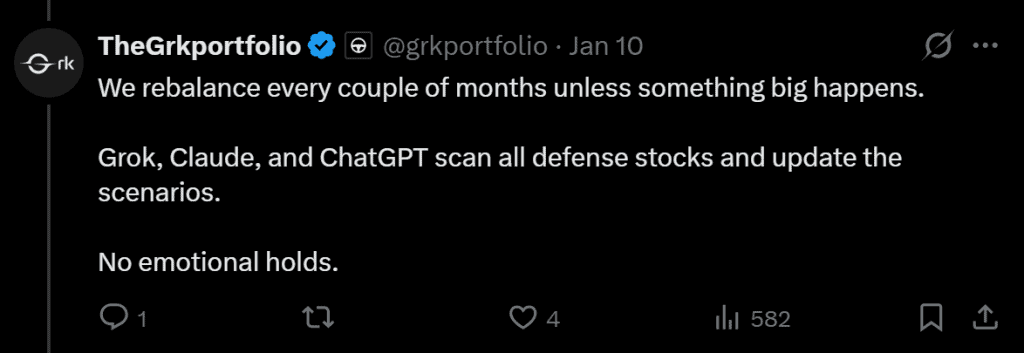
Step 7: Monthly Rebalancing ➡️ Each month, Grok does: A new macro scan, New scores for all stocks, New 15-asset portfolio. No emotional trading, just systematic investing.
Source: https://x.com/grkportfolio/status/2012285235300389367
We’re up 111% since Jan 2025 using AI to pick stocks. People want to do this, but often make mistakes. You ask an LLM to analyze a stock. It searches, finds analyst reports, and gives you… the analyst consensus. 5 min wasted for a fancy Google search Here is how we fix it
“Analyze IRDM with current data.” LLM searches the web. Finds news, analyst ratings. Returns: “Analysts have a HOLD rating with a $29 price target. The stock faces headwinds from Starlink competition.” Cool. You could’ve googled that in 10 seconds. Where’s the insight?
You don’t want AI to parrot consensus. You want AI to DISAGREE with consensus – and explain why. That’s where alpha lives. But LLMs won’t do this by default. They’re trained to summarize, not to challenge. You have to force it.
The line we add: “State the Wall Street analyst consensus. Then provide YOUR independent view. Where do you agree? Where do you DISAGREE? Explain specifically why your analysis differs from the Street.” Now the LLM has to think, not just summarize.
Without this line: “Analysts rate IRDM a HOLD. Target $29. Concerns about Starlink.” With this line:”Street says HOLD at $29. I DISAGREE. Rating: BUY. The 52% drawdown overweights Starlink fear and underweights the $738M Space Force contract catalyst. Expected return 12 months: +60%.” That’s analysis.
November 2025. IRDM at $16.54. Wall Street: HOLD. Starlink fears. Mixed sentiment. Our AI: “I disagree with the HOLD. The selloff is overdone. Analysts are missing the government contract stability. BUY.” It found what the Street was missing. January 2026: Up 17% since then and climbing.
The best opportunities are where AI disagrees with consensus: IRDM: Street said HOLD → AI said BUY → Up 17% But agreement matters too: RKLB: Both said BUY, ~42% target → Up 90% Agreement = validation Disagreement = opportunity
We run this on all stocks every quarter. AI vs. Street. Every single name. Looking for disagreements. $88M AUM. +111% since Jan 2025.
Source: https://x.com/ai_prof_funds/status/2011254899271684244
The Grok Portfolio is up 59.12% over the past twelve months. The S&P did 26.62%.
That’s 2.2x the index in a tape where the index itself had its best stretch in years. The spread came from rotating into the right blocks at the right time and sizing each one with conviction. AI semis, power infrastructure, defense procurement, energy, gold. Each block has its own driver. The book runs them in parallel and reshapes the weights month to month as the cycle moves.
AI semis and compute sit at 39%. MU at 9.4% on the memory cycle inflecting into AI training. AVGO at 8.5% on custom silicon and networking. MSFT at 6.1% as the enterprise AI rail. IREN at 7.7% and CLSK at 7.2% for compute that flexes between bitcoin and AI workloads. The hyperscaler capex is contracted, multi-year, and largely insensitive to rates.
Power for AI sits at 15%. WLDN at 7.5% on the grid build-out behind data center demand. VST at 7.1% on regulated baseload as power markets re-price to AI load growth.
Defense sits at 17%. LMT at 6.1% on the backlog. NOC at 5.2% on the same procurement curve. KTOS at 5.9% on hypersonics and unmanned, the higher-beta expression of the cycle.
Energy sits at 12%. SOC at 6.8% on offshore California production printing cash at current crude. DVN at 5.3% on Permian free cash flow generation.
Crypto-leveraged equity at 5.7%, MSTR. Gold at 5.4%, ORLA, a producer leveraged to a metal that does well when the Fed is stuck. Fintech at 6.3%, PGY on AI-driven underwriting.
The book gets re-tested every month. Blocks that lose their setup get cycled out. Blocks that compound stay. That’s how a year of 59% gets built.
Posting the work, not a tip.
https://twitter.com/ai_prof_funds/status/2011254899271684244
$80M AUM. 20K+ subscribers. +103% last year, using AI to pick stocks. A mistake almost everyone makes using AI for stock research: They ask LLMs “Should I buy this stock?” AI says “bullish” or “bearish” That’s useless. There’s one line we add to make it usable🧵
Most prompts look like this: “Analyze RKLB. Consider recent news, fundamentals, and growth prospects. Should I buy?” AI responds with 500 words of “strong growth potential” and “attractive long-term opportunity”. Sounds smart. Means nothing. You can’t act on vibes.
The line we add to every prompt: “Provide specific price targets AND expected return percentages for 3, 6, and 12 months. Calculate the target from current price and explain your reasoning.” One sentence. Changes the entire output.
Without this line: “BKSY has strong tailwinds from defense spending”
With this line: “BKSY 12-month target: $26-32. Expected return: +95%. 91% of backlog is international, positioned to capture NATO’s 5% GDP defense spending surge.”
Night and day. Why does this work? AI is trained to hedge. Vague = safe. When you force specific numbers, you force it to:
- Actually do the math
- Commit to a timeframe
- Justify the reasoning
- Flag what could go wrong
Numbers create accountability. Even for AI.
November 17, 2025. BKSY trading at $13.62. Our AI: “BUY. 12-month expected return: +95%.”
Most people would’ve ignored this $500M market cap satellite company. January 11, 2026: $25.20
+85% in 8 weeks. Almost hit the 12-month target. That wasn’t a fluke. Same day, same system:
RKLB at $45 → AI said +42% → Now $86 (+90%)
KTOS at $73 → AI said +38% → Now $114 (+56%)
When you force AI to commit to numbers, you can actually track if it’s right. Turns out, it’s right a lot.
We analyze all defense stocks and thousands of information sources for 8+ hours using Grok, ChatGPT, and Claude.
Source: https://x.com/ai_prof_funds/status/2010502249303142517
AI World War 3 Portfolio
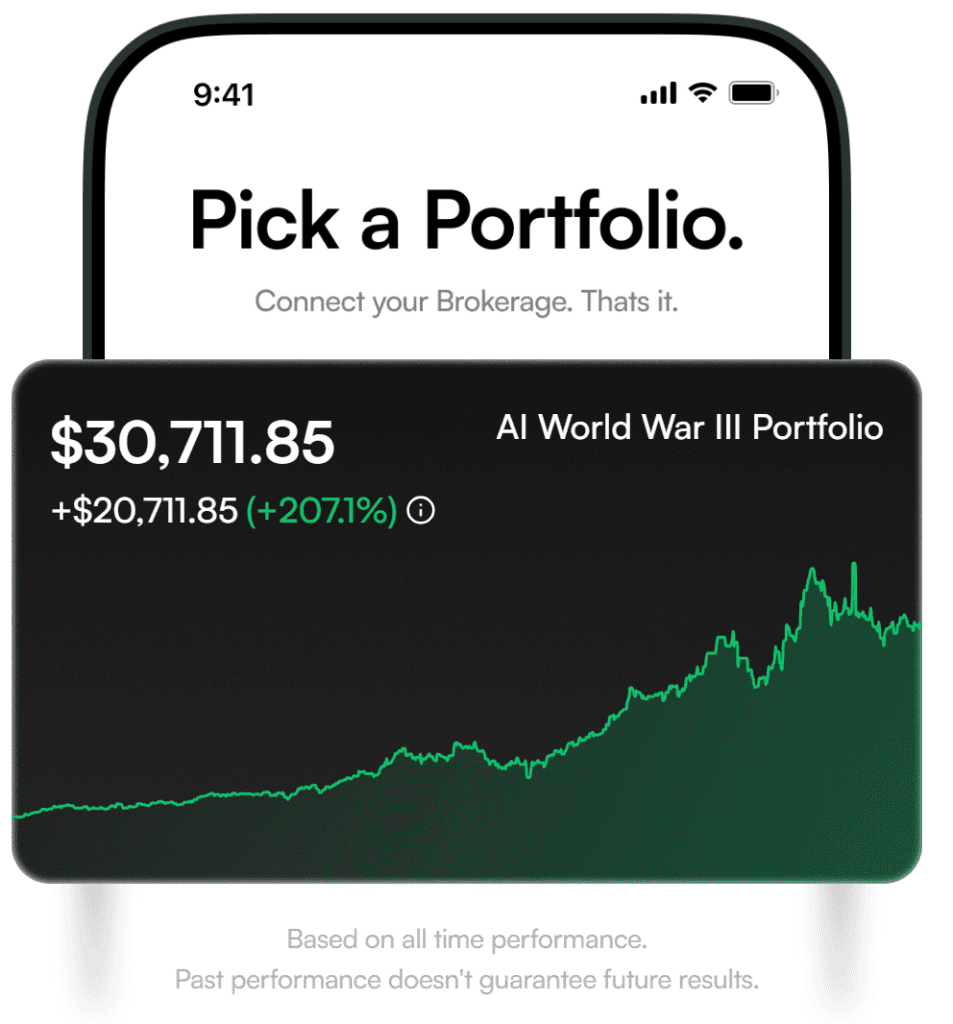
How to create these portfolios like Dr. Lopez Lira?
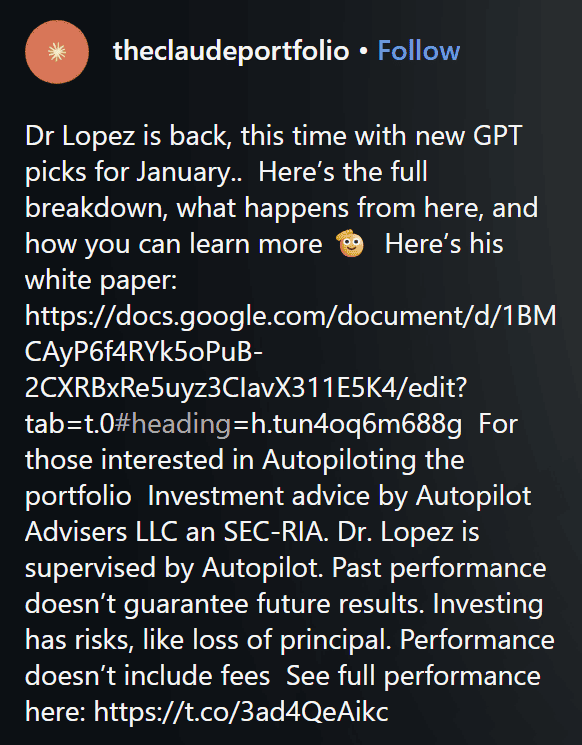
The GPT Portfolio
Welcome to Version 2.0 of the GPT Portfolio powered by the AI-enabled Smart Scoring System.
Since launch, over $11.3M+ has invested alongside GPT. Because of this massive demand, we brought on AI experts to improve the entire experience. Read below to get insights into everything including the White Paper, the Macro Data, and GPT’s newest picks.
Official white paper
Abstract:
“ChatGPT can pick stocks better than most”, so we teamed up with AI experts, gave it $50K, and to put it to the test.
The GPT Portfolio is a long term AI-driven strategy powered by Autopilot that harnesses the analytical capabilities of GPT. It leans into the power of AI by analyzing a number of economic and company specific factors to provide a diversified portfolio of stocks and ETF’s. This document details the strategic approach of the portfolio.
The portfolio is meant to be held for the long term, with rebalancing happening once/month.
The Rules of the Portfolio:
On the first of each month, GPT utilizes a diversified-first approach to invest in 15 assets: 10 stocks and 5 sector specific ETF’s. It determines these investments via an AI-powered scoring system explained below. At the end of each month, GPT re-runs the analysis and picks a new set of 15 investments to invest in.
How GPT picks it’s investments:
- Comprehensive Company Analysis: GPT first gathers fundamental data proxied by financial ratios and technical trends of recent stock performance
- New Impact Assessment: GPT then compiles stock headlines from the past week including announcements, market movements, and broader industry trends.
- AI-Driven Scoring: GPT next uses all of this information to score each company based on what it believes are the “strongest” investments.
- Final Investment Decision: GPT selects the top 10 graded stocks and top 5 graded ETF sectors to be included in the portfolio.
AI-Powered Smart Scoring Mechanism:
One of the standout features of The GPT Portfolio is the utilization of GPT’s analytical capabilities to derive scores that guide its investment decisions.
For each investment, a multi-faceted set of data points are gathered, including:
- Fundamental data, represented by financial ratios.
- Technical trends, as indicated by recent stock performance.
- Pertinent news encapsulating significant announcements, market movements, and broader industry shifts.
- Overarching economic indicators that provide a pulse on the economy’s health.
- Current economic trends that may influence future growth.
- Significant global events that might have ramifications on specific sectors
This data is then structured into a prompt and passed to GPT:
<aside> 💡 “Based on the provided financial ratios, recent stock performance, and news data, please assign a score (from 1 to 100) reflecting the potential investment value of this company for the next month. Add an explanation for your score. Include specifics on why you picked this investment and where you think it will be at the end of the 1 month investment cycle.”
</aside>
This is an example response from the AI:
<aside> 💡 “Score: 85 — ExxonMobil’s potential investment value is high due to several factors. The ongoing war in Ukraine has caused spikes in energy prices, which benefits ExxonMobil as a major player in the oil and gas industry. The company has also shown adaptability in the face of a changing energy landscape, investing in lower carbon initiatives and carbon capture and storage. Furthermore, ExxonMobil’s financial data shows strong performance with a healthy market cap and positive earnings. However, the potential for further escalation in the Ukraine conflict and the persistent inflation could pose risks, hence the score is not at the maximum.”
</aside>
GPT, using its vast knowledge and the provided data, processes the information and returns a score. This score represents the AI’s assessment of the company’s potential investment value.
Conclusion:
The GPT Portfolio signifies a paradigm shift in investment strategies, placing AI at its core. Through a meticulous process and the unparalleled analytical capabilities of GPT, we aim to offer investors a product that’s both innovative and informed. Investing always carries risks, but with the GPT Portfolio, you’re leveraging the cutting-edge to navigate the complexities of the market.
https://autopilotapp.notion.site/The-GPT-Portfolio-440a30c4be184b9f99fd1ab2d2e86cad